Ron's T.V. And Stereo Installation
Projector/Screen Installation in St Paul, MN
Overview of Projector and Screen Installation
Projector and screen installation in St Paul, MN involves setting up a projection system that displays video content onto a dedicated screen surface using a projector mounted or positioned at a calculated distance. This installation requires precise alignment between the projector lens, screen placement, and room dimensions to ensure a clear and properly scaled image.
The process begins with evaluating the room environment, including lighting conditions, ceiling height, wall structure, and available mounting locations. These factors directly affect image brightness, screen size selection, and projector placement distance.
Ron's T.V. And Stereo Installation
performs projector and screen installations with attention to image geometry, mounting stability, and system integration to ensure the projection setup operates correctly within the intended viewing space.
Ceiling Mount Installation
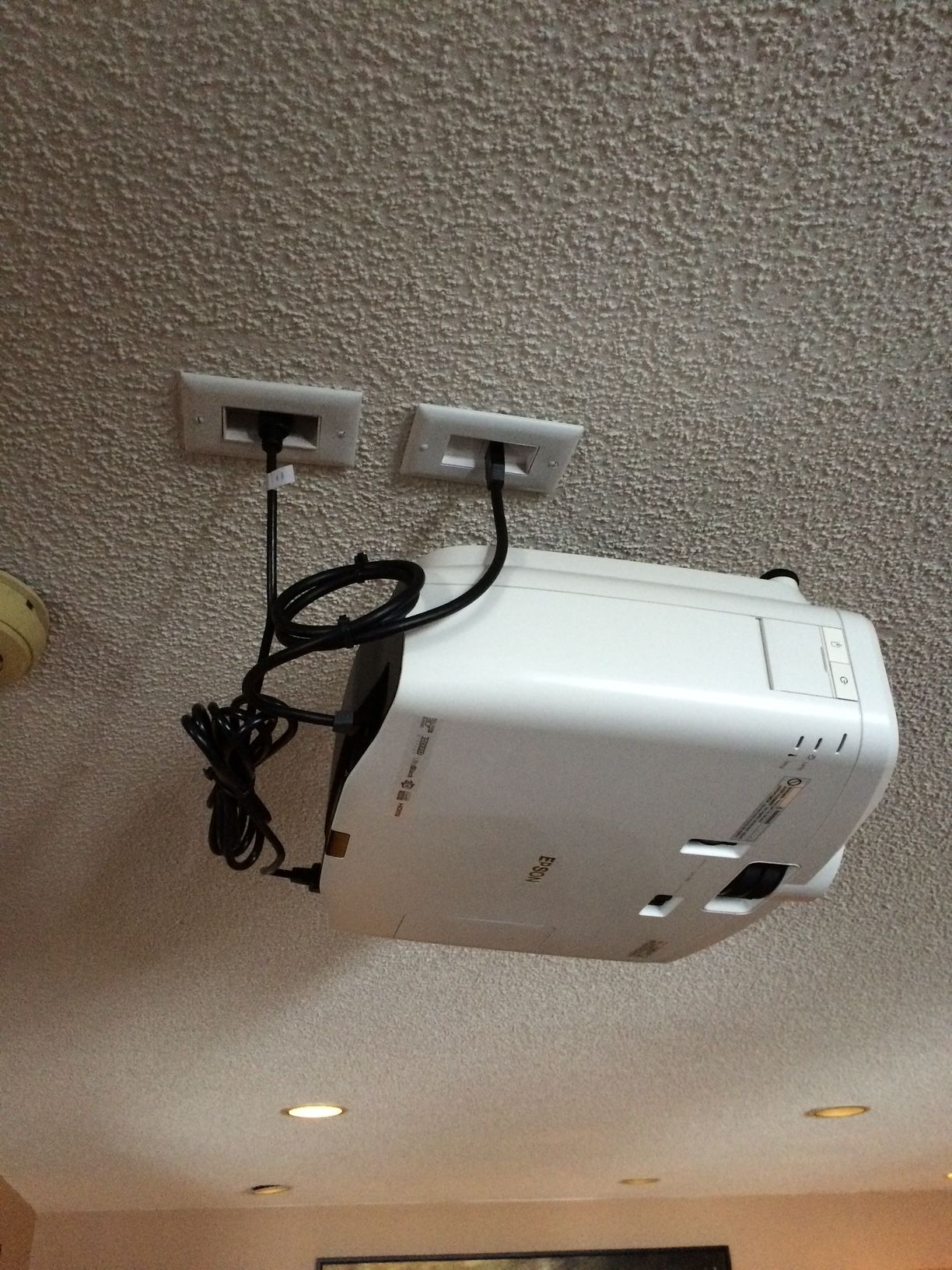
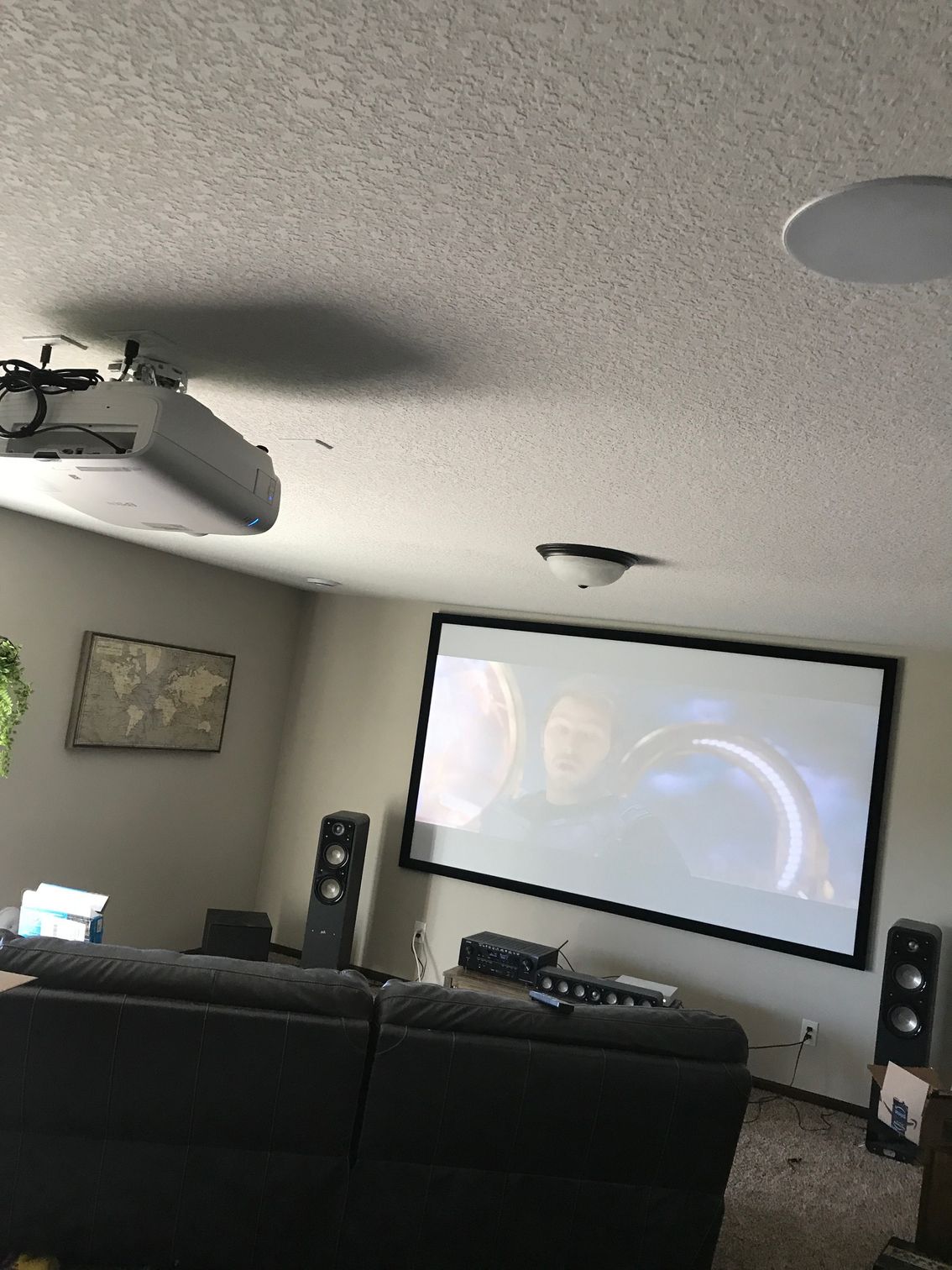
Ceiling-mounted projectors are installed using reinforced brackets anchored into ceiling joists or structural supports. This placement allows the projector to remain fixed and aligned with the center of the screen while reducing obstruction in the room.
Throw Distance Calculation
Throw distance refers to the space between the projector lens and the screen surface. This distance determines image size and clarity. Accurate measurement ensures that the projected image fills the screen without distortion or cropping.
Lens Alignment and Positioning
Once mounted, the projector lens is aligned with the screen’s center point. Adjustments are made to ensure that the image is square and properly positioned, avoiding issues such as keystone distortion or skewed projection angles.
Projector Placement and Mounting Setup
Proper projector placement is essential to achieving a sharp and correctly aligned image. The installation method depends on whether the projector is ceiling-mounted, wall-mounted, or placed on a shelf or rear platform.
Fixed Frame Screen Installation
Fixed frame screens are mounted directly onto wall surfaces and remain permanently stretched for a flat viewing surface. These screens require accurate leveling to ensure a perfectly rectangular image display.
Motorized Screen Configuration
Motorized screens are installed with ceiling or wall-mounted housings that allow the screen to retract when not in use. Electrical connections are configured to synchronize screen movement with control systems or remote operation.
Screen Height and Viewing Alignment
Screen height is determined based on seating position and viewing angle. Proper positioning ensures that viewers maintain a comfortable line of sight without excessive upward or downward head movement.
Projection Screen Installation and Setup
The projection screen serves as the display surface and must be installed with precise alignment to match the projector output.
Room Lighting and Image Optimization
Lighting conditions play a significant role in projector performance and image clarity. The installation process includes evaluating ambient light and adjusting system settings accordingly.
Ambient Light Assessment
Natural and artificial light sources are analyzed to determine their impact on projected image visibility. Rooms with high ambient light may require higher-lumen projectors or specialized screen materials.
Screen Gain and Surface Selection
Screen materials vary in reflectivity, known as gain. Higher gain screens reflect more light, improving brightness in well-lit environments, while lower gain screens provide better color accuracy in controlled lighting conditions.
Image Contrast Adjustment
Projector settings are adjusted to enhance contrast, brightness, and color balance based on room lighting. This ensures that details remain visible in both dark and bright scenes.
HDMI and Signal Cabling
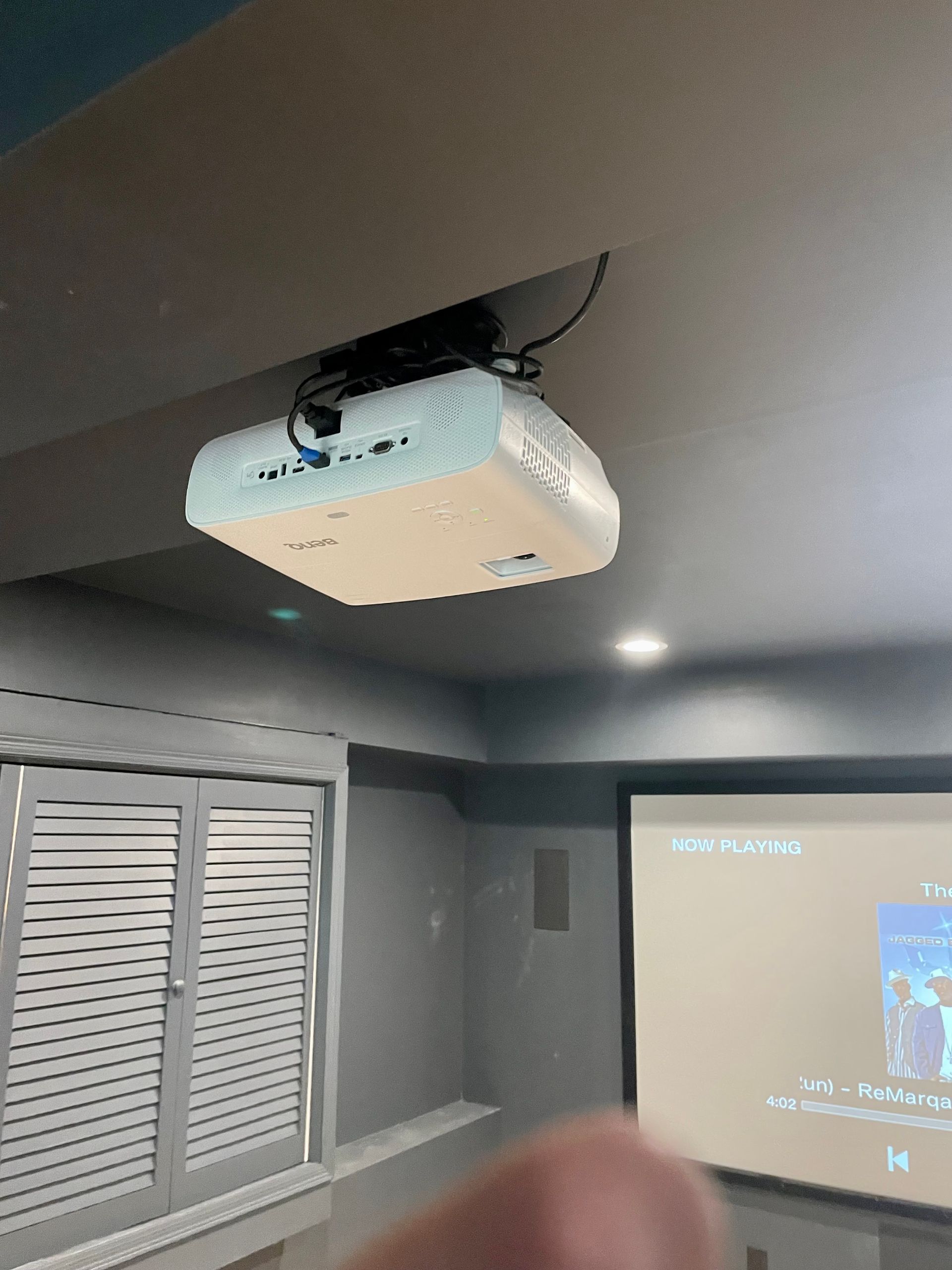
High-definition video signals are transmitted through HDMI or optical cables, which are routed through walls, ceilings, or protective channels to maintain a clean installation appearance.
Power Supply Configuration
Projectors and motorized screens require stable electrical connections. Power distribution is arranged to ensure consistent operation without voltage fluctuations or interruptions.
Device Connectivity Setup
Projectors are connected to external devices such as streaming players, gaming consoles, and AV receivers. These connections allow seamless input switching and synchronized multimedia playback.
Wiring and System Integration
Wiring and integration ensure that the projector system communicates effectively with all connected media devices.
Calibration and Image Adjustment
Once installation is complete, the system is calibrated to ensure accurate image reproduction and optimal viewing quality.
Keystone Correction and Geometry Alignment
Keystone correction is used to adjust image shape and eliminate distortion caused by angled projection. This ensures that the image appears rectangular and properly aligned with the screen borders.
Focus and Sharpness Tuning
Lens focus is adjusted to ensure that the projected image is sharp across the entire screen surface. This step is essential for maintaining clarity, especially on larger projection setups.
Color and Brightness Calibration
Color settings are adjusted to achieve balanced tones, accurate skin representation, and consistent brightness across different content types.
Projection Alignment Verification
The projected image is tested to confirm proper alignment with the screen edges. Adjustments are made to eliminate any remaining skew or overspill.
Input and Playback Testing
All connected devices are tested to verify correct signal transmission and smooth playback. This includes switching between multiple media sources to ensure system responsiveness.
Full System Operational Review
A final review is conducted to confirm that the projector, screen, audio system, and connected devices function together as a unified entertainment setup. Ron's T.V. And Stereo Installation ensures the installation is fully configured and ready for consistent use.
Final Testing and System Review
The final phase of projector and screen installation involves comprehensive testing to ensure the system performs reliably under real viewing conditions.


